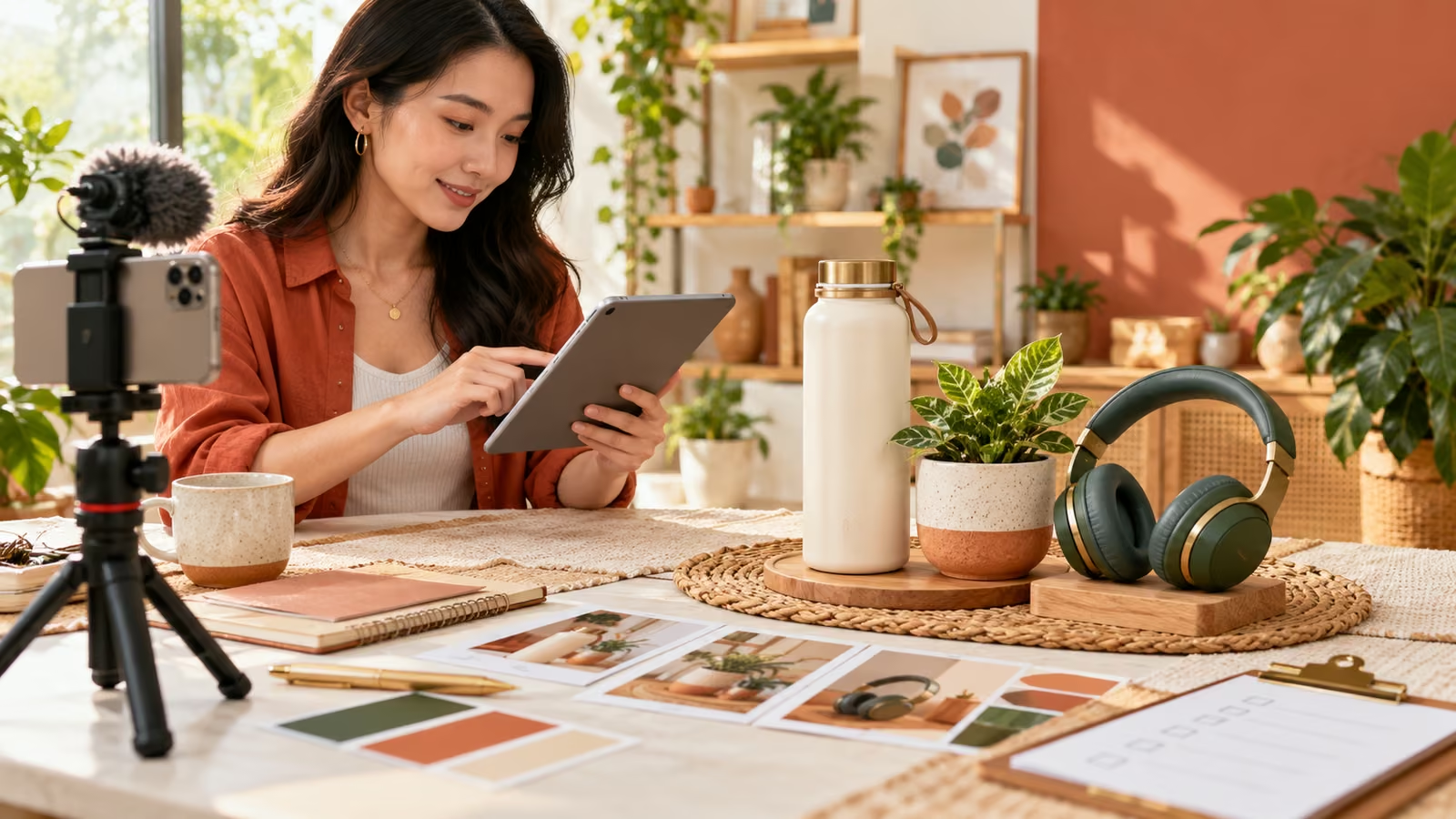
A Pin that says "buy this lamp" asks for a purchase before it solves the room problem that started the search. A stronger affiliate funnel begins with intent: "warm desk lighting for a small rental." It demonstrates the setup, names the constraint, tags the products that actually appear, and lets the shopper decide. Pinterest's new Shopee partnership can connect that inspiration to eligible products, but the creator still has to earn the click.
Pinterest and Shopee's September 23 partnership announcement covers eligible Shopee Affiliate creators in Indonesia and Brazil. It says eligible creators can connect accounts, discover eligible products, tag multiple Shopee Affiliate products in a Pin or video, optionally apply relevant affiliate links automatically, and earn commissions on eligible purchases under applicable terms. It does not announce universal access, a commission rate, or guaranteed earnings. Check the creator's account and current Shopee Affiliate terms before building the campaign.
Growit o1 is an expressive pocket AI device in development. One planned direction is an owner-triggered connected Sight beta that requires a compatible connected service after setup. Final production details and supported services remain unannounced. This guide treats o1 only as a possible deliberate review checkpoint; it does not claim o1 can connect Pinterest or Shopee accounts, select products, create links, publish Pins, read analytics, or earn commissions.
Build each Pin around one search problem, one useful proof, and one transparent path to the products shown.
Map the funnel on one card
Start with a single use case rather than a catalog. The working artifact should connect the searcher's question to the Pin, product set, destination, and measurement.
| Funnel step | Creator decision | Evidence to keep |
|---|---|---|
| Search intent | Specific problem, style, place, or occasion | Current Pinterest search observations |
| Pin promise | What the viewer will learn or see | Title and first-frame draft |
| Proof | Real demonstration, comparison, fit, or limitation | Original photos, notes, and dates |
| Product tags | Only eligible items visibly used or clearly discussed | Product names and account eligibility |
| Disclosure | Plain affiliate relationship near the recommendation | Final caption and current label state |
| Destination | Correct Shopee listing, variant, price context, and availability | Pre-publish link check |
| Measurement | Saves, outbound action, eligible conversion data, returns or questions where available | Dated reporting window |
This card keeps a high-volume affiliate plan from turning into disconnected product links. Duplicate it only after one complete path works and remains compliant.
Choose an intent with room for judgment
Pinterest says people use visual search to explore what to wear, what to buy for the home, and what to try next. Translate that behavior into a narrow creator promise. "Five renter-friendly ways to soften overhead light" is more useful than "best home products" because it gives the viewer a situation, constraint, and reason to save.
Collect language from current Pinterest search suggestions and your own audience questions without claiming access to private search-volume data. Group phrases by the decision they express: inspiration, comparison, setup, maintenance, gift, size, budget, or occasion. Choose one primary intent per Pin.
Demonstrate before tagging products
Create original evidence. For the lighting example, photograph the same desk with overhead light alone, then with the demonstrated lamp placement. State the room conditions and limits: camera exposure, wall color, lamp size, bulb, and whether installation was required. Do not invent a before-and-after result or imply that a product appears in the room when it does not.
The partnership allows multiple eligible products in one Pin or video. Use that capability when the items form a real set, such as a lamp, bulb, and cable organizer used in the demonstrated setup. A long tag list can weaken trust when products are incidental or untested. Use the Growit thumbnail analyzer to check whether the problem and result remain readable at small size, then inspect the live Pinterest preview.
Write the Pin for discovery and decision
Put the search problem in the title and show the useful result in the first frame. The description should add context the image cannot carry: who the setup fits, what each item does, material limits, and the commercial relationship. Avoid a string of repeated keywords.
A practical sequence is: problem frame, complete setup, two detail frames, limitation, then a clear next action. For video, let the viewer see the product operating before the purchase prompt. If the price, stock, shipping, or variant can change, direct people to the current listing instead of freezing an unstable claim in the creative.
Disclose the affiliate relationship clearly
Pinterest's Commercial and Branded Content Guidelines require affiliate content to be original, useful, transparent about its commercial nature and link behavior, and free of artificial traffic manipulation. The policy also directs affiliates to its paid-partnership guidelines and warns against repetitive, high-volume affiliate posting.
Use the disclosure functionality available to the account and write a plain disclosure a viewer can understand before acting, consistent with local law and current program rules. Do not hide it in a distant board description or vague wording. The Shopee connection and automatic-link option do not replace the creator's responsibility for disclosure, accuracy, or product claims.
Check the handoff to Shopee
Before publishing, open every tagged destination while signed out or in an ordinary viewer state when practical. Confirm the product, seller, variant, availability, destination market, and the behavior of the affiliate path. Record the check time because listings can change.
Do not promise that every click or purchase will qualify for commission. Pinterest's announcement says eligible purchases are subject to program terms. Returns, attribution windows, excluded items, account standing, and other conditions may affect reporting. Treat the current Shopee Affiliate dashboard and terms as the operational source.
Use o1 as a deliberate visual review idea
If a released o1 experience later supports owner-selected campaign images, an owner-triggered checkpoint could help a creator compare the Pin with the product-proof card. It would still require human verification of the item, link, disclosure, and claim. Read what o1 can do before planning a connection and do not assume platform access.
Measure the whole funnel
Review more than commission. Track useful saves, outbound action, eligible purchase reporting, product questions, corrections, and returns where the platforms make those signals available. Compare Pins with the same intent and similar age; a saved planning Pin may convert later than a time-sensitive offer.
After the reporting window, make one decision: keep the search intent, improve the proof, narrow the product set, repair the destination, or stop recommending the item. Use the Growit description optimizer to revise the promise and disclosure for the next Pin, then verify the final wording yourself. One honest, useful funnel is a better starting asset than fifty thin affiliate Pins.