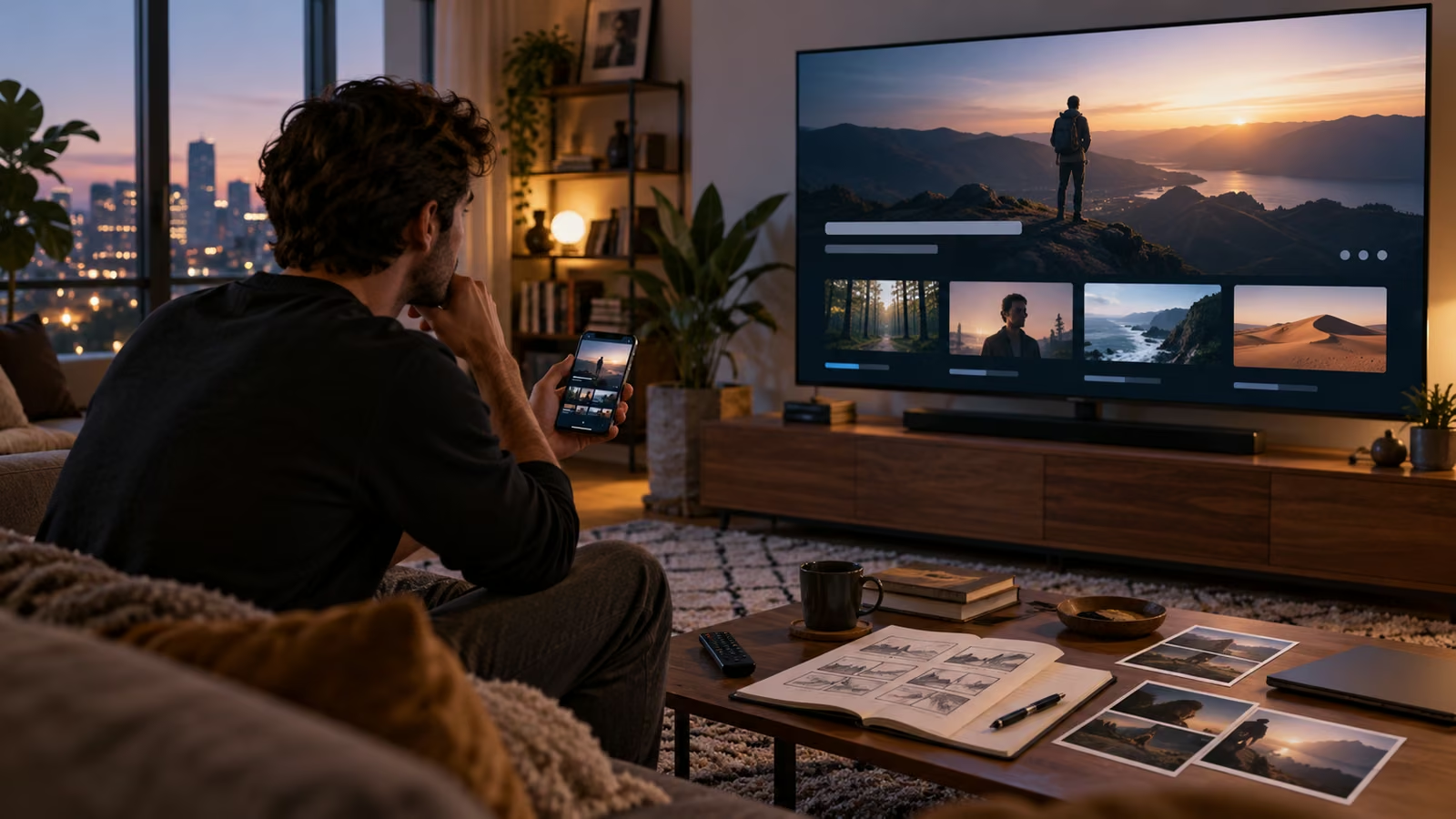
A creator finishes six episodes that look excellent on a laptop. On a television across the room, the thumbnail text disappears, every episode begins with the same long setup, and the playlist order makes the finale appear first. A series needs a living-room pass because the audience may browse with a remote, watch with other people, and continue from one episode to the next.
YouTube's September update, Creators, Shorts, series and new TV features, describes more ways to organize episodic content and reach viewers on television. YouTube's current series playlists help page explains that a verified creator can mark a playlist as an official set, that a video can belong to only one series playlist, and that YouTube may use the signal in presentation or discovery.
Growit o1 is an expressive pocket AI device in development. Its current Sight workflow is an owner-triggered connected beta that requires a compatible connected service after setup. Final capabilities, supported services, pricing, and availability will be announced before sales open. In this guide, o1 is a deliberate review prompt rather than an autonomous publisher, account operator, or source of guaranteed performance.
A series is a sequence of promises. Every episode should work alone while making the next choice easy to understand from ten feet away.
Write the series card
| Field | Decision |
|---|---|
| Viewer promise | What changes after completing the series? |
| Episode count | Planned release and minimum viable arc |
| Entry point | Best first episode for a new viewer |
| Continuity | Visual, audio, host, and naming rules |
| Navigation | Playlist order, end screens, cards, and description links |
| Success | Completion, return, next-episode, and satisfaction signals |
Keep the promise specific. “A six-part beginner lighting workshop” sets a clearer expectation than “Season One.” Number episodes only when order matters, and put the unique problem before repeated series language in the title.
Design at television distance
Show every thumbnail at a small card size on a large screen. The subject and episode distinction should survive without tiny text. Use a consistent system for color, face scale, and series mark, but give each episode one unique object or result. Avoid placing essential details near the edges where device interfaces may cover them.
Test subtitles, speech clarity, music level, dark scenes, and fine interface demonstrations. A phone screen recording can be unreadable on a TV if the edit does not zoom to the action. Check from the couch with an ordinary remote rather than standing near the display.
Use Growit's title generator to draft titles that lead with the episode's unique value. Review o1 offline and connected boundaries before using an owner-triggered checkpoint around unreleased episode files.
Build the official sequence
Create the playlist on desktop, confirm the intended order, and mark it as an official series when the channel and content qualify. YouTube notes that the account must be verified, a video cannot be in more than one series playlist, and the creator must own the uploaded videos and rights.
Write a concise playlist description that explains who the series serves and where to start. Add each episode after checking its visibility, title, thumbnail, captions, and rights. Use end screens and spoken transitions that make sense even if the viewer entered from search in the middle.
Test three viewing journeys
First, start with episode one and continue using only the television interface. Second, enter from a search result on a middle episode and find the beginning. Third, resume after several days and identify the next unwatched episode. Record every point where the order, title, or navigation is ambiguous.
Ask a reviewer to use the remote without instructions. If they cannot tell which video is next, simplify numbering and artwork. If the opening repeats too much context, move recurring orientation into a short visual cue and get to the episode-specific proof faster.
Publish with a maintenance plan
Before launch, confirm music and footage rights across every episode, especially for content intended for long-term viewing. Schedule release dates, community posts, and corrections. Record who owns playlist order and what happens when an episode is replaced, removed, or updated.
Review the series after a meaningful sample, not one evening. Look for where viewers enter, leave, and continue. Treat platform discovery as uncertain; the official series signal can help YouTube understand the set, but it does not guarantee recommendations.
A successful living-room test produces calm, readable choices and a clear sequence. The viewer should understand the series, pick an episode, and continue without needing the creator's production notes.