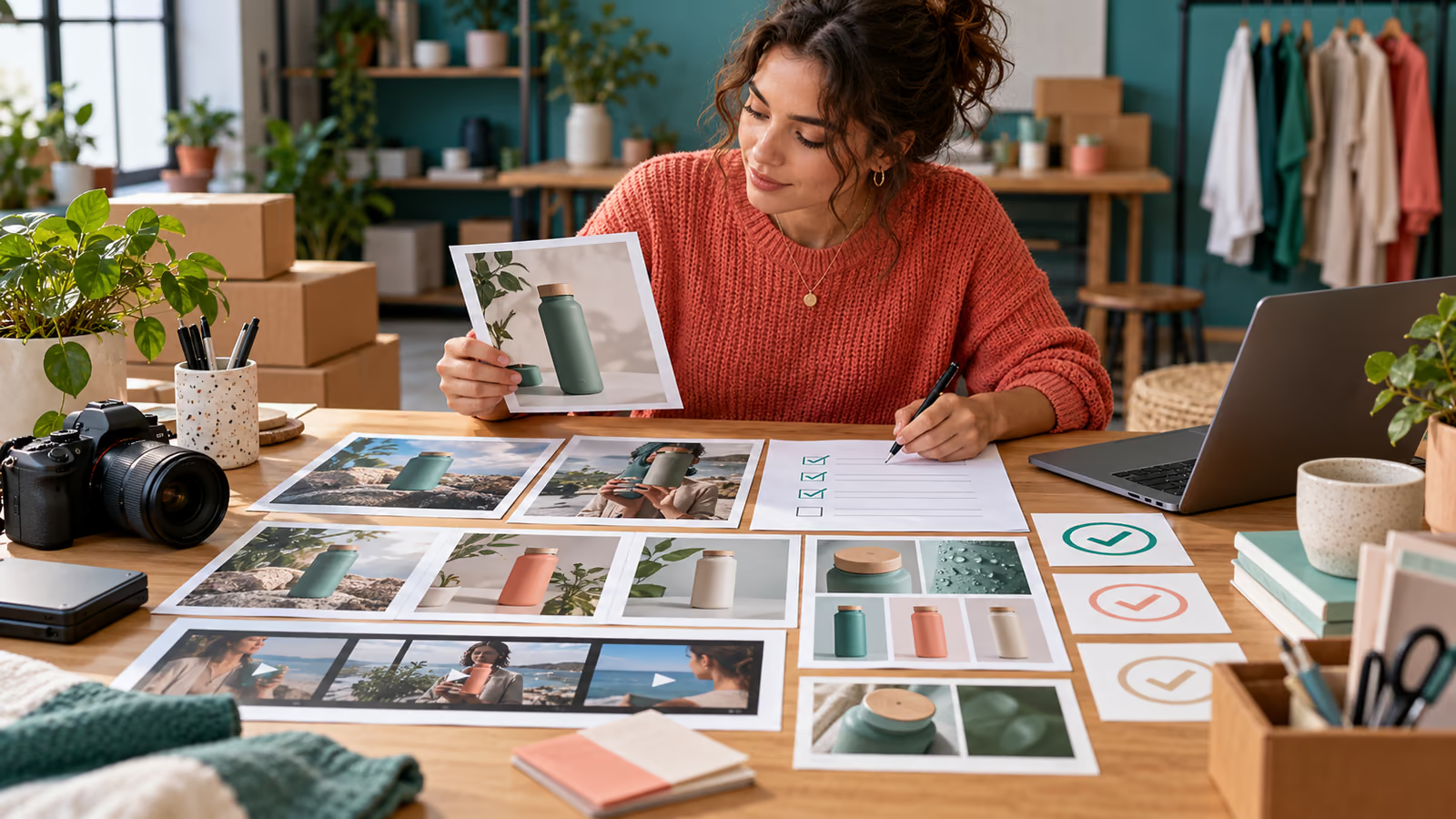
A small business turns product photos into dozens of short videos with an AI creative tool. The campaign scales quickly, but nobody can answer which images were supplied by the owner, which scenes were generated, who approved the product claims, or how a wrong price will be corrected across every version. Speed without provenance creates a support problem before it creates a growth system.
This guide uses TikTok's primary sources UNGA 2026: Building a Trusted and People-Centered Digital World and TikTok AI-generated content labels. Tools, labels, market availability, commerce rules, and account eligibility can change, so verify the live product and current policy before publishing.
Growit o1 is an expressive pocket AI device in development. Its current Sight workflow is an owner-triggered connected beta that requires a compatible connected service after setup. Final capabilities, supported services, pricing, and availability will be announced before sales open. In this guide, o1 is a deliberate review prompt rather than an autonomous publisher, account operator, fact checker, or source of guaranteed performance.
Every scaled variant should point back to the source media, approved claim, human decision, disclosure state, and correction owner that made it publishable.
Create the proof file before generation
| Record | Minimum evidence |
|---|---|
| Source asset | Owner, capture date, license, consent, product version, and file hash |
| Generation | Tool, account, prompt purpose, model setting, input list, and output ID |
| Claim | Exact wording, authoritative source, limits, reviewer, and expiration |
| Disclosure | AI label, paid relationship, affiliate status, and visible placement |
| Release | Final editor, Shop listing, audience controls, publish time, and rollback owner |
Separate platform claims from your evidence
TikTok's UNGA 2026 article describes AI tools for small businesses, reported economic impact, responsible-AI principles, and platform labeling work. Attribute figures to TikTok and its cited reports. Do not turn a platform case study into a forecast for another seller, product, or market. Record which statement came from which source and when you accessed it.
Preserve source media and rights
Keep the original photograph or footage, creator agreement, talent consent, music license, location permission, and product sample record. If a tool animates a still or changes a scene, note which elements are synthetic. Do not upload a customer's face, private message, or third-party asset because it is convenient input. Limit access to the people and systems needed for the defined campaign.
Label the actual creative state
TikTok's AI label announcement explains creator labels for content that is completely generated or significantly edited with AI. Check current policy and available controls in the posting flow. A label does not clear copyright, consent, endorsement, regulated claims, or advertising disclosures. Keep sponsorship and affiliate notices understandable without requiring a viewer to infer them from an AI label.
Audit the product path
Match the video to the exact Shop listing or approved destination. Verify seller identity, variant, price, stock, shipping territory, returns, safety information, and evidence for every benefit stated on screen. If the creative depicts a result the product cannot reliably produce, remove it. Use Growit's campaign tools to organize concepts and sponsorship tools to record partners, then perform account actions and final reviews manually.
Sample variants before scaling
Review a representative sample across hooks, languages, products, and audiences. Check hands, text, logos, packaging, color, demonstrations, voice, captions, claims, and destination links. Use a release gate for sensitive categories. Define a stop rule for complaints, incorrect price, policy warning, poor-quality traffic, or evidence that a variant misleads viewers.
Rehearse the correction
Pick one test variant, simulate a price or claim change, and time how long it takes to pause distribution, update the listing, replace the creative, and answer support questions. Keep the prior version and reason for change. Use o1 only as a deliberate checkpoint: source owned, generation logged, claim supported, labels set, listing matched, sample reviewed, correction tested. It should not operate TikTok, approve advertising, or promise commercial results.
Keep the proof file with source captures, approvals, final exports, platform settings, and correction history. A scalable creative system earns trust when every published output has a visible evidence trail and a named person who can stop it.