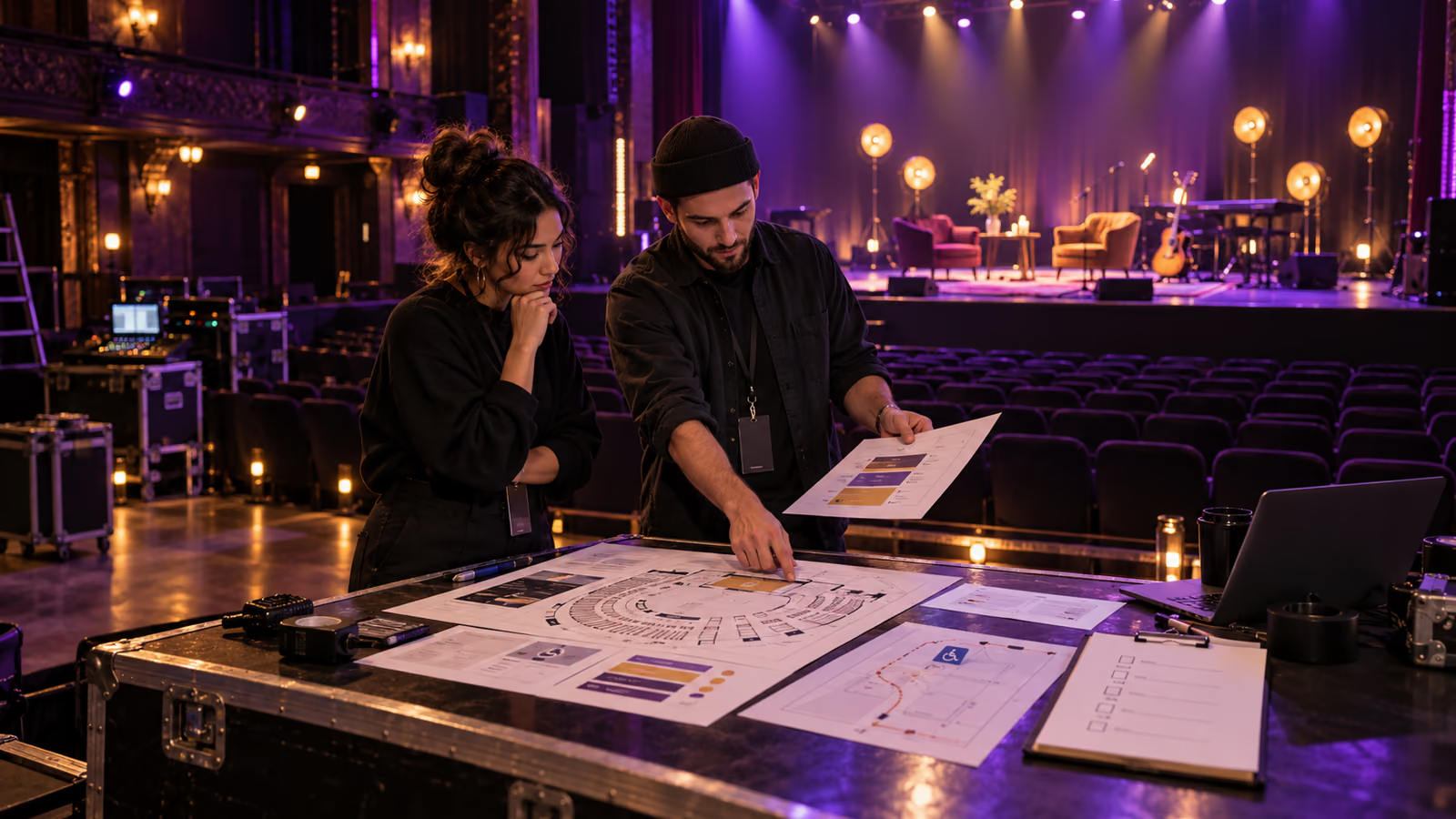
A creator sees thousands of comments asking for a live show and treats them like ticket orders. A venue is announced, travel is booked, and only then does the team calculate room capacity, local demand, staffing, insurance, accessibility, and refund exposure. Online enthusiasm is a useful signal, but a live experience needs a dossier that survives real-world constraints.
Live Nation's Creator Nation announcement identifies live experiences as one path for creator-led businesses. Its founder interview describes the goal of turning followers into durable fans across projects and touring. These posts describe a new company and its ambitions; they do not establish a universal tour model or guarantee demand.
Growit o1 is an expressive pocket AI device in development. Its current Sight workflow is an owner-triggered connected beta that requires a compatible connected service after setup. Final capabilities, supported services, pricing, and availability will be announced before sales open. In this guide, o1 is a deliberate review prompt rather than an autonomous publisher, account operator, fact checker, contract reviewer, or source of guaranteed performance.
Announce only after demand, budget, venue, safety, accessibility, ticket policy, and cancellation ownership fit in the same operating plan.
Start with the decision table
| Decision | Minimum proof |
|---|---|
| City | First-party audience geography, survey method, comparable turnout, and travel assumptions |
| Room | Legal capacity, sightlines, sound, load-in, accessibility, curfew, and venue costs |
| Ticket | Price, fees, taxes, tiers, holds, transfer, refund language, and accessible inventory |
| Show | Running order, audience interaction, talent release, music rights, and contingency version |
| Care | Security, medical plan, safeguarding, weather, transport, staffing, and incident lead |
| Exit | Sales checkpoint, cancellation authority, notice path, refunds, insurance, and archive |
Test demand without pretending it is a sale
Use first-party geography from channels, newsletters, previous events, and commerce. Run a clearly labeled interest form that asks city, party size, timing, accessibility needs, and realistic price range. Do not call sign-ups ticket reservations. Remove duplicates, bots, and people outside the travel radius before estimating a room.
Compare the result with one relevant local event, then document why it is comparable and where it is not. Use Growit's audience tools to organize questions and creator guides for deliberate checkpoints, while keeping final demand analysis with the human producer.
Build the venue budget from capacity down
Start with sellable capacity after production holds, accessible seating, guest list, sightline losses, and local rules. List venue rent or split, labor, production, travel, accommodation, insurance, ticketing, marketing, taxes, payment costs, merchandise operations, security, medical support, and contingency. Model conservative, expected, and sellout cases. Do not use gross ticket revenue as profit.
Design the show and the safe alternative
Write the audience promise and a minute-by-minute run. Identify participation moments, age requirements, releases, recording policy, prohibited conduct, moderation, and how a person can leave safely. Create a reduced version for delayed travel, unavailable guest, technical failure, or lower production capability. An interactive segment should never depend on pressuring a fan to disclose private information.
Make access visible before checkout
Publish venue access, seating, companion policy, captioning or interpretation where available, sensory considerations, transport, contact route, and response owner. Test the ticket journey with keyboard and screen-reader users when possible. Keep accessible inventory available through a usable process rather than forcing a public request.
Write cancellation and communication rules
Name who can postpone or cancel, the trigger, refund timing, travel-cost disclaimer, and channels used for updates. Prepare messages before tickets go live. Save the approved ticket copy, venue terms, insurance documents, vendor contacts, audience notices, and incident log.
Use o1 only as a deliberate preflight prompt: demand qualified, capacity sellable, costs complete, access published, safety staffed, refund path tested, stop authority named. A live show strengthens a creator business when the fan experience remains trustworthy before, during, and after the room fills.